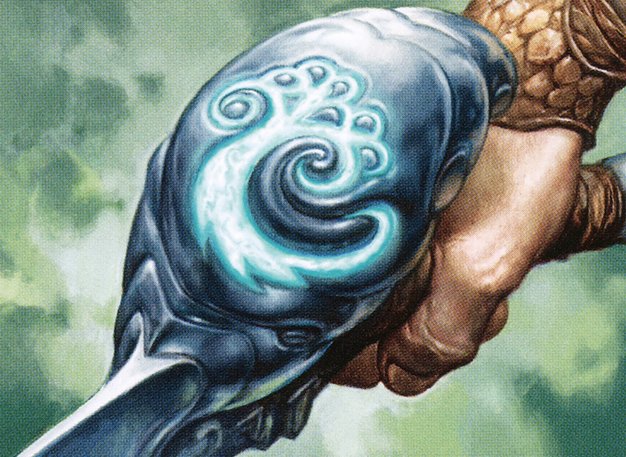
Adapted From Simic Combine and The Philosophy of Blue-Green
"Nature is perfect, but we can help it reach its potential."
In the Starfall Galaxy, there are those who refuse to see nature and knowledge as opposites. Blue-Green Devotion represents the synthesis of biological understanding and systematic improvement—the belief that through careful study and respectful intervention, we can guide natural systems toward greater flourishing. It is neither the cold artifice that replaces life nor the passive acceptance that refuses to help, but the patient work of understanding nature so deeply that we can perfect it without destroying its essence.
Blue-Green Devotion
Blue-Green Devotion seeks to understand and perfect natural systems through knowledge and patient observation. Can manifest as sustainable bio-engineering and ecological wisdom, or as playing god and erasing natural diversity for efficiency.
Component Devotions Blue and Green
Mana Current: Understanding and perfecting natural systems, knowledge-guided evolution
Virtues: Sustainable bio-engineering, ecological wisdom, adaptive innovation, synthesis of nature and knowledge
Vices: Playing god with genetics, erasing natural diversity for efficiency, cold analysis of living beings, hubris in "improving" nature
Affinity: Strong affinity with both Blue and Green organizations. However, Blue and Green are enemies on the color wheel, creating internal philosophical tension. Both Blue and Green are allied with White, creating potential for strong three-way harmony in community-focused ecological projects. Complex stance toward Black (Blue affinity/Green rivalry) and Red (Blue rivalry/Green affinity).
Rivalry: Primary rivalry with Red (Blue strongly opposes chaos and impulsiveness), though Green's affinity with Red creates nuanced complexity.
Narrative Role: Blue-Green combines intellectual mastery with natural acceptance to create bio-technologies that work with life rather than replacing it. In Starfall, Blue-Green manifests in the Adaptation Institute—a research collective developing biological solutions to survival challenges, from Rift-adapted organisms to symbiotic technologies that merge flesh and function.
Character Examples:
Viridian Ascent bio-engineers developing living starships
Adaptation Institute researchers studying Rift-touched evolution
Eco-restoration specialists healing damaged biospheres
Genetic archivists preserving and adapting endangered species
Symbiote designers creating mutualistic biological tools
Druids using scientific method to understand natural magic
Mechanical Application: Circumstance bonus when dealing with biological research organizations, ecological scientists, adaptive engineers, and those who blend nature with knowledge. Bonus to Coerce/Demoralize against those who reject either natural limits or intellectual progress, pure industrialists, and anti-science traditionalists.
Blue-Green Magic: When spellcasters manifest Blue-Green aligned spells, they feel a sense of organic clarity—understanding life's patterns as both beautiful and comprehensible. Sometimes they experience the wonder of watching evolution accelerate, cells reorganize, or ecosystems achieve balance through guided intervention. The magic feels alive yet purposeful, growing yet directed, like watching a seed become exactly what it was meant to be.
The Guided Garden
Blue-Green Devotion begins with a question that seems contradictory: Can we improve perfection? Blue says everything can be optimized through knowledge and iteration. Green says nature is already perfect, shaped by eons of selection and adaptation. Blue-Green resolves this apparent conflict with a profound insight: nature is perfect for what it has faced, but we can help it adapt to what it will face.
The Blue-Green devotee looks at the galaxy and sees neither pristine wilderness to preserve unchanged (pure Green) nor raw material to reshape according to human will (pure Blue), but living systems that can be understood and guided. A forest is not sacred because it's "untouched"—it's sacred because it's a complex, functional, beautiful system. And if we understand that system deeply enough, we can help it become more resilient, more diverse, and better able to flourish in changing conditions.
This is the philosophy of the biomancer—one who combines a biologist's knowledge with a gardener's patience. They don't create artificial life from scratch (too Blue); they don't leave ecosystems entirely to chance (too Green). They partner with nature, understanding its principles so thoroughly that their interventions feel natural, work sustainably, and enhance rather than replace biological systems.
In Starfall Galaxy, this philosophy manifests in the Adaptation Institute's approach to survival. Colonizing a world with a toxic atmosphere? Don't just build domes (pure Blue)—develop organisms that can break down the toxins while humans adapt respiratory systems to process the modified air. Rift-storms warping local fauna into dangerous mutations? Don't exterminate them (anti-Green)—study the mutations, understand the adaptive mechanisms, and guide evolution toward symbiotic relationships. Species going extinct due to environmental change? Don't just preserve samples (too static)—help them evolve to survive new conditions.
The Adaptive Synthesis
The perfect approach, in Blue-Green's vision, combines:
Understanding before intervention - Study ecosystems exhaustively before changing anything (Blue rigor, Green respect)
Working with existing patterns - Enhance natural capabilities rather than replacing them with artificial substitutes
Long-term thinking - Changes must be sustainable across generations, not quick fixes
Diversity as strength - Multiple solutions to problems; biological redundancy as resilience
Adaptation over control - Systems that evolve naturally within guided parameters
Knowledge preserved in practice - Understanding living systems by participating in them
This is not primitive "back to nature" thinking nor cold technological replacement. It is a sophisticated biological partnership—recognizing that billions of years of evolution have created solutions more elegant than anything we could design from scratch, while also acknowledging that intelligent guidance can help life adapt faster to new challenges.
The Blue-Green Devotee: A Dual Nature
A devotee of Blue-Green Devotion sees themselves as both student and shepherd of life. They study nature with scientific rigor (Blue) while respecting it as teacher and partner (Green). They are often found in biological research, ecological restoration, adaptive medicine, bio-engineering, and any field requiring a deep understanding of living systems combined with a willingness to thoughtfully intervene.
The Ecological Innovator
At their best, Blue-Green devotees are:
Thoughtful bio-engineers who develop technologies that work with biology rather than replacing it
Patient researchers who spend decades understanding ecosystems before proposing changes
Adaptive healers who help bodies evolve resistance rather than just treating symptoms
Restoration ecologists who guide damaged biospheres back to health
Living archivists who preserve species by assisting them to adapt to changing conditions
Synthesis thinkers who find elegant solutions by combining natural patterns with intentional design
These individuals combine Blue's analytical precision with Green's ecological wisdom. A Blue-Green researcher at the Adaptation Institute doesn't just sequence genomes—they understand those genes in context, knowing how traits interact with environments, how organisms fit into food webs, how changes ripple through systems. They intervene carefully, always asking "What does the ecosystem need?" before "What can we make?"
A Blue-Green druid accepts technology—they use sensors to monitor forest health, apply scientific method to understand why sacred groves thrive, and may even use genetic tools to preserve endangered species. They see no contradiction between microscopes and reverence.
The Hubristic Designer
At their worst, Blue-Green devotees become:
Arrogant gene-splicers who "improve" organisms without understanding broader consequences
Efficiency fanatics who eliminate "redundant" species, destroying diversity for streamlined ecosystems
Cold vivisectionists who dissect living systems without empathy for individual suffering
Monoculture creators who replace diverse ecosystems with "optimized" single-purpose biomes
Playing god without wisdom—creating new organisms that destabilize existing systems
Dismissive of tradition while overconfident in their own understanding
The danger of Blue-Green is hubris masked as wisdom—believing that because you understand some principles of how life works, you understand enough to reshape it. A Blue-Green bio-engineer might create a "superior" crop that outcompetes native species, destroying local ecosystems. A researcher might eliminate a "useless" organism only to discover too late it was keystone species. An Adaptation Institute scientist might enhance humans for Rift resistance, creating unforeseen genetic cascades generations later.
Blue-Green can forget that nature contains more complexity than we can ever fully map, and that some "imperfections" serve purposes we don't yet understand. Sometimes the wisest intervention is patience. Sometimes "helping" nature means leaving it alone.
The Tensions and Alliances
Internal Tension
Blue-Green is an enemy color pair, meaning Blue and Green fundamentally oppose each other in philosophy:
Blue believes in change and improvement; Green believes in acceptance of what is
Blue values knowledge and artifice; Green values instinct and nature
Blue sees perfection as something to achieve; Green sees perfection as already present
Blue thinks in progress and future; Green thinks in cycles and the present
This creates inherent philosophical tension within Blue-Green devotees. They must constantly balance:
When to intervene vs. when to let nature take its course
How much change is adaptation vs. how much is violation of natural order
Whether their "improvements" enhance life or replace it with something artificial
This tension is Blue-Green's defining characteristic—they're always negotiating between their colors, using each to check the excesses of the other. Blue's desire to optimize is tempered by Green's respect for what exists. Green's acceptance is activated by Blue's recognition that conditions change and life must adapt.
Relationship with Shared Ally
With White: Potential for Strong Alliance
Both Blue and Green are allied with White, creating potential for powerful three-way harmony. Blue shares White's appreciation for order and systematic thinking. Green shares White's focus on community and collective welfare. Blue-Green can work exceptionally well with White when all three colors align around common goals.
Areas of Harmony:
Community health through systematic ecology - White's community care + Blue's methodology + Green's natural wisdom
Sustainable systems serving collective good - Combining all three values into bio-technologies that help everyone
Protecting civilization and nature together - Understanding they're interconnected, not opposed
Long-term planning for communal benefit - White's service + Blue's foresight + Green's generational thinking
Areas of Tension:
White may prioritize human community over natural ecosystems (White-Green tension with Green)
White may impose rigid traditions preventing adaptive innovation (White vs. Blue)
Blue-Green's experimental interventions may threaten White's social order
White may demand community conformity that Blue-Green sees as limiting diversity
In Practice: A Blue-Green ecologist and a White civic planner might collaborate beautifully on sustainable city design that serves both people and ecosystems. Or they might clash when White wants to build housing for refugees while Green wants to preserve wilderness, and Blue proposes bio-engineered solutions White considers too radical. The three-color potential is real but requires balancing all perspectives.
Relationship with Complex Colors
With Black: Conflicted Neutral
Blue appreciates Black's pragmatic pursuit of power through mastery and willingness to push ethical boundaries in research. Green abhors Black's exploitation of natural resources and treating ecosystems as commodities.
Blue-Green can work with Black in pure research contexts—both value results and aren't squeamish about methods. But they clash fundamentally when Black wants to patent life, strip-mine ecosystems for profit, or treat organisms as property rather than partners. A Blue-Green researcher might collaborate with a Black scientist on breakthrough genetics but refuses when Black wants to commodify the results.
With Red: Complex Opposition
This relationship embodies Blue-Green's internal complexity. Blue strongly opposes Red's chaos and impulsiveness—careful biological engineering requires patience and planning, not passion and spontaneity. However, Green shares genuine affinity with Red's authenticity, emotional honesty, and living in the moment.
The Contradiction:
Blue: "Red's recklessness destroys delicate systems before we understand them"
Green: "Red's instincts connect to natural rhythms we've forgotten"
Blue: "Red acts without thinking about consequences"
Green: "Red lives authentically in the present, as animals do"
In Practice: A Blue-Green ecologist might deeply appreciate a Red wilderness guide's intuitive connection to the forest (Green respects this) while being profoundly frustrated by their refusal to systematically document what they know (Blue opposes this). Or they might admire Red's passionate defense of endangered species while despairing at Red's rejection of careful, slow restoration in favor of immediate action.
Blue-Green often finds Red simultaneously inspiring and infuriating—Red embodies the wild authenticity that Green loves and the impulsive chaos that Blue fears.
Blue-Green in Starfall Galaxy
The Adaptation Institute (Primary Blue-Green Faction)
The Adaptation Institute was founded in the aftermath of the Rift-Storm Cataclysm, when thousands of worlds found their biospheres radically altered by Rift exposure. Traditional approaches failed: pure technology (Blue) couldn't replace complex ecosystems, and passive acceptance (Green) meant watching species die as environments shifted faster than natural selection could respond.
A coalition of Viridian Ascent bio-engineers and Azure Archivists xenobiologists formed the Institute with a revolutionary approach: guided evolution. Not genetic engineering from scratch, but careful study of how life was already adapting to Rift-exposure, identification of beneficial mutations, and strategic encouragement of adaptive traits.
They proved their value when a colony world's primary food crop began failing due to Rift-altered soil chemistry. While others proposed expensive hydroponic replacement (pure Blue) or abandoning the world (giving up), Institute researchers identified naturally occurring resistant variants in wild populations, crossbred them with cultivated strains, and, within three generations, produced crops that thrived in the new conditions—all using the plants' own genetic potential.
Today, the Institute operates as both a research center and consultation service. They maintain the Adaptive Archive—living samples of organisms from across the galaxy, particularly those showing interesting Rift-adaptations. They help colonies develop sustainable bio-technologies. They study how life evolves in Rift-space. They pioneer symbiotic technologies—biological systems that merge with users to provide capabilities without replacing natural functions.
What Represents Blue-Green Devotion
Here are several things Blue-Green cares about, along with why:
Evolution - Nature's optimization process (Green) understood and potentially guided through knowledge (Blue)
Adaptation - Biological flexibility responding to environmental change; combining Green's acceptance with Blue's active intervention
Ecology - Understanding interconnected systems (Blue) within natural contexts (Green)
Bio-Technology - Tools grown rather than built; technology that works with biology instead of replacing it
Genetic Archives - Preserving diversity (Green value) through systematic documentation (Blue method)
Symbiosis - Mutualistic relationships as a model for how knowledge and nature should interact
Metamorphosis - Transformation guided by both internal patterns (Green) and external pressures understood intellectually (Blue)
Living Ships - Viridian Ascent's greatest achievement; vessels that are organisms, combining Green growth with Blue design
Mycelial Networks - Natural information systems studied scientifically; Green wisdom made Blue-accessible
Rift-Adapted Life - Organisms that have evolved in impossible conditions; studying them reveals life's potential
Sustainable Enhancement - Making things better without destroying their essential nature
Long-Term Studies - Patience (Green) combined with systematic documentation (Blue); decades-long research projects
Cross-Species Learning - Understanding that other life forms have knowledge humans lack
Biomes as Labs - Entire ecosystems as experimental systems; learning from life at scale
The Archive as Living Thing - Knowledge preserved not in dead files but in growing, changing organisms
Synthesis Over Replacement - Always asking "Can we enhance what exists?" before "Can we build something new?"
Playing a Blue-Green Character
Core Motivations
You believe nature is brilliant, and understanding it makes you better at helping it flourish
You trust both scientific method and ecological wisdom—neither alone is sufficient
You see knowledge as tool for enhancement, not replacement
You value patience and long-term thinking over quick fixes
You're fascinated by how life adapts and want to participate in that process respectfully
Internal Conflicts
When does enhancement become replacement? You've made something "better," but is it still the same thing? Have you helped or destroyed?
When does understanding justify intervention? You know how the system works, but does that mean you should change it?
When does patience become paralysis? Green urges waiting to understand more; Blue urges acting on current knowledge. How long do you study before helping?
Roleplay Hooks
You constantly observe and document living things around you
You explain natural phenomena using both scientific terms and ecological metaphors
You're uncomfortable with purely artificial environments and pure wilderness—you prefer synthesis
You carry samples, specimens, or symbiotic organisms as companions/tools
You become defensive when others call your work "playing god" or "unnatural."
Ethical Dilemmas
You've developed an organism that solves a problem perfectly but might outcompete native species. Do you release it?
A dying species could be saved through radical genetic modification, but it would no longer be "natural." Do you intervene?
Your research could help millions, but requires experimenting on living subjects. How do you balance individual suffering against collective benefit?
An ecosystem is collapsing. Do you let nature take its course (Green) or actively intervene with bio-engineering (Blue)?
The Promise and Peril of Synthesis
Blue-Green Devotion represents humanity's most sophisticated relationship with nature: neither domination nor submission, but partnership through understanding. It is the work of every researcher who spends decades learning from ecosystems, every bio-engineer who enhances rather than replaces, every healer who helps bodies adapt rather than just treating symptoms. It creates technologies that work with life rather than against it, preserves species by assisting them to evolve, and recognizes that the most elegant solutions often emerge from combining natural wisdom with intentional guidance.
But it also represents humanity's most dangerous hubris: the belief that understanding something means we can safely reshape it, that our knowledge is sufficient to improve systems billions of years in the making, that "guided evolution" won't have unforeseen consequences cascading through generations. It can become a cold dissection of living systems, an arrogant erasure of diversity for efficiency, and the creation of biological disasters justified as "progress."
The Blue-Green devotee walks this razor's edge daily. Will you be the thoughtful biomancer who helps life flourish through understanding, or the arrogant geneticist who plays god with systems too complex to fully comprehend? In Starfall Galaxy, that choice determines whether bio-technology serves life or replaces it, whether adaptation means survival or extinction, whether knowledge illuminates nature or blinds us to its wisdom.
"We study to understand. We understand to help. We help by working with what life has already created."
— Founding Principle of the Adaptation Institute
Comments
Post a Comment